

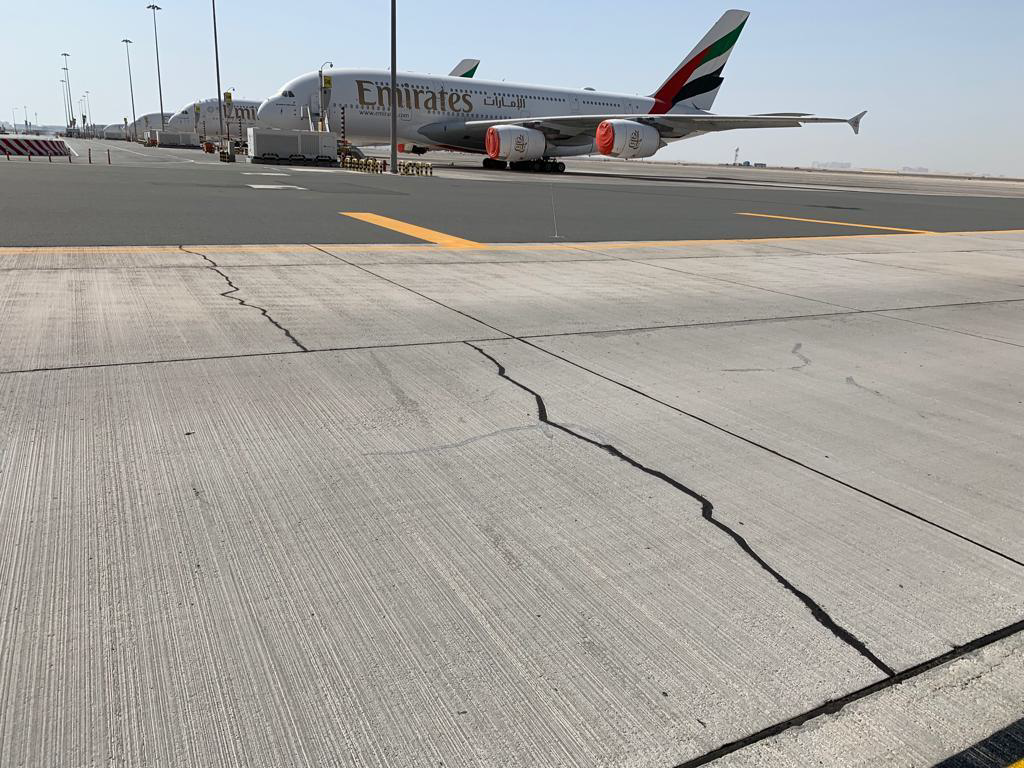
Concrete Crack Sealing – Required Machinery & Material:
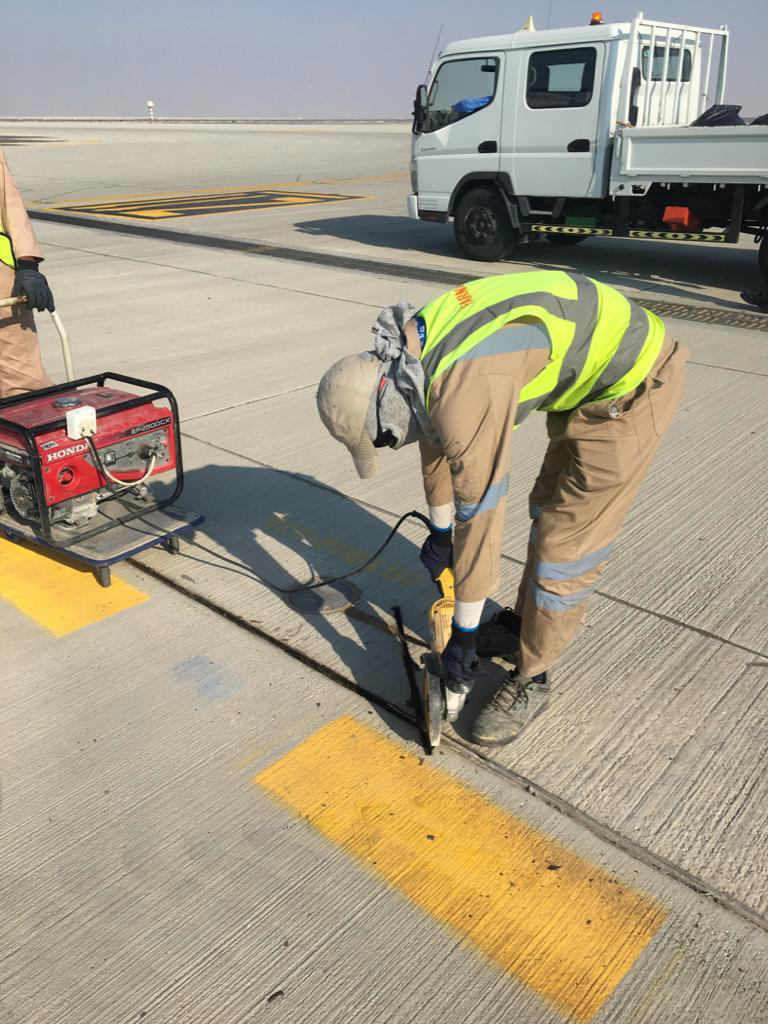
Marathon Concrete Router and/or Hand Grinder: For routing, modifying, and opening cracks to the designated geometry.
Air Compressor / Wind Blower & Hot Air Lance (HAL): For high-velocity de-dusting, moisture purging, and thermal conditioning using pressurized gas.
Marathon Rubberized Oil-Jacketed Kettle: For indirect, thermostatically regulated heating via thermal transfer oil, equipped with continuous agitation and direct wand/nozzle application.
Approved Rubberized Hot-Applied Sealant: Specified high-performance ASTM compliant polymer-modified joint sealant (Black).
Hand Tools & Mastic Tape: Required surface profiling squeegees, taping aids, and site safety materials as needed.
Procedure:
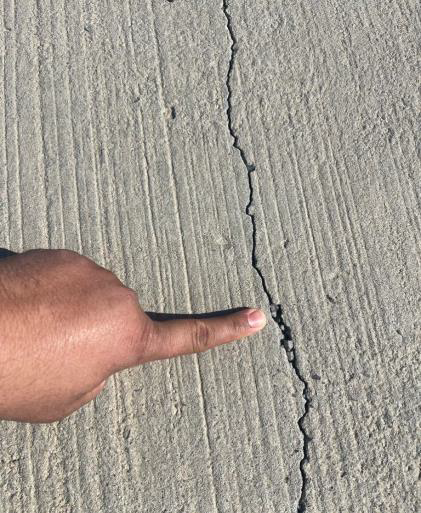
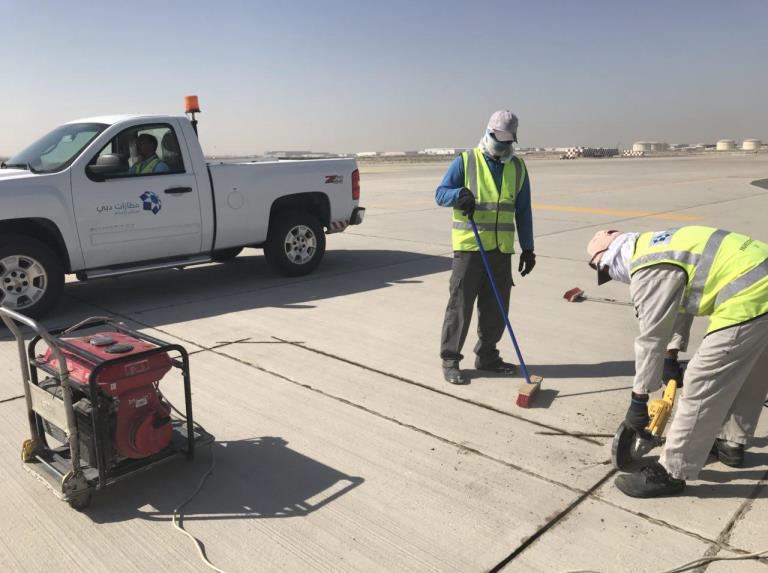
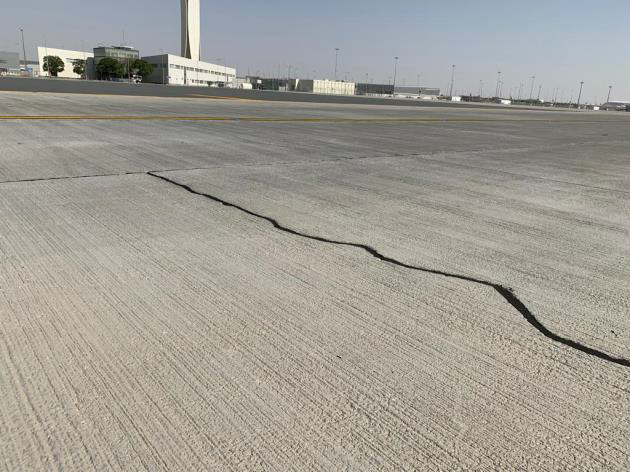
1. Routing & Cleaning: Routing and/or grinding of the existing crack to create a reservoir approximately 5 mm wider than the crack width. This ensures a proper reservoir geometry so the sealant settles correctly and does not track or pop out under vehicle wheel loads. Once routed, the joint reservoir is cleaned thoroughly of all dust, grit, and loose matrix using high-velocity compressed air or wire brushing.
2. Sealant Application: Application of the rubberized hot-poured sealant into the prepared crack reservoir, terminated approximately 2 mm below the concrete slab surface. The sealant is applied at approximately 180°C using an oil-jacketed kettle equipped with an automatic agitator and calibrated digital temperature sensors.